Google Just Put the Links Back in AI Search. Here's What May 6 Means for Every Shopify Store.

Google Just Put the Links Back in AI Search. What May 6 Means for Every Shopify Store.
For two years, the SEO world has watched Google AI Overviews eat the open web. Click-through rates collapsed by 58 percent on top-ranking pages. Global publisher traffic from Google fell roughly a third in 2025. The Daily Mail saw desktop CTR drop from 25.23 percent to 2.79 percent on queries where an AI Overview appeared above the link. Forty-six top US news sites lost traffic. Six gained it. The link-based economy that funded the open web for two decades was being quietly dismantled by a feature most users never asked for.
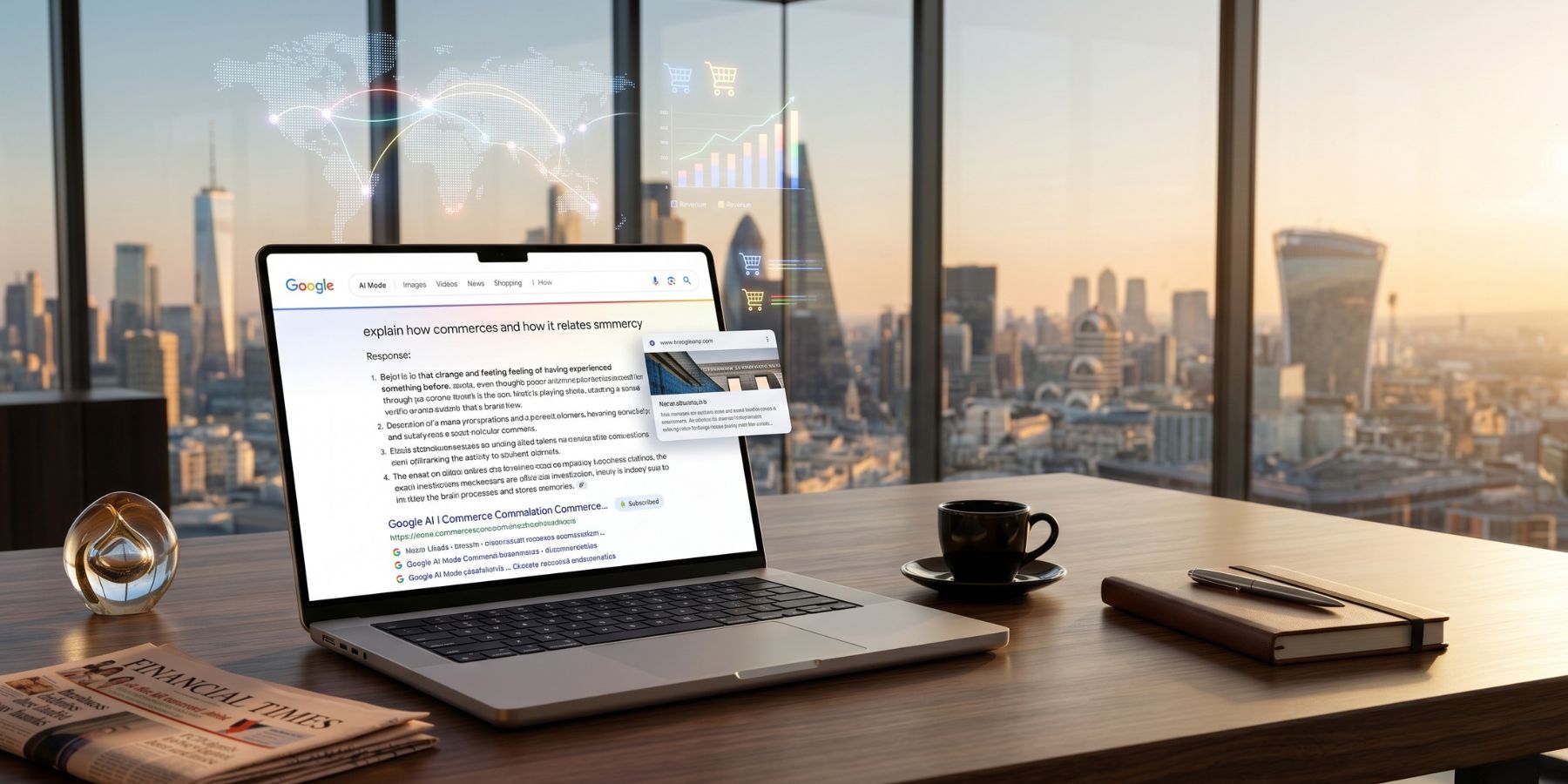
On May 6, 2026, Google blinked. Hema Budaraju, Vice President of Product Management for Search, announced five simultaneous changes to AI Mode and AI Overviews. Inline links placed next to the text they support. Subscription labels on links from publications a user pays for. Hover previews on desktop. Named creator citations from forums and social posts. A new "explore more" section at the end of every AI response.
This is the most consequential structural change to Google search since AI Overviews launched. And it lands nine days before Google I/O 2026, where the next round of AI announcements will reset the table again. Here is what changed, why Google did it, and what it means for the four million Shopify merchants whose stores are now discoverable in Google AI Mode by default.
- On May 6, 2026, Google rolled out five changes to AI Mode and AI Overviews designed to send more clicks to the open web after two years of CTR collapse.
- Inline links now sit next to the relevant generated text instead of being grouped at the bottom of the response.
- Links from a user's paid subscriptions are labeled "Subscribed," and early testing showed users were significantly more likely to click them.
- Desktop users now see a preview card on hover for every inline link, showing site name and page title before they click.
- AI responses now surface named creators and handles from forums, Reddit, social media, and Substack as "firsthand sources."
- Every AI response can end with a new "explore more" section showing different angles on the topic.
- For Shopify operators on Google AI Mode (one of the four Agentic Storefronts channels), this is a clear signal: structured product data plus original first-person editorial content is now the visibility play.
- Google I/O on May 19 is nine days away. The rules will move again.
Table of Contents
- First, the Collapse: What Google Is Actually Walking Back
- The Five Changes Google Announced on May 6
- Why Google Did This Now
- What This Means for Shopify Operators
- The Operator Playbook for the New AI Search
- What One Solo Operator Is Doing About It This Week
- The Other Shoe: Google I/O on May 19
- Summary
- Frequently Asked Questions
- Sources
First, the Collapse: What Google Is Actually Walking Back
To understand why May 6 matters, you have to understand what Google was doing before May 6. The numbers are not subtle.
AI Overviews now appear on 48 percent of all Google searches as of March 2026, up from 31 percent a year earlier. On queries that trigger them, the click-through rate for the top-ranking organic result fell 61 percent, from 1.76 percent to 0.61 percent. A separate Ahrefs analysis of 300,000 keywords pegged the drop at 58 percent for informational queries on position-one pages. The Pew Research Center reported a 46.7 percent average CTR reduction across its panel. Publishers reported absolute losses of 27 percent to 90 percent depending on category.
The aggregate damage is even uglier. Chartbeat's analysis of more than 2,500 publisher websites globally, published in the Reuters Institute's Journalism and Technology Trends 2026 report, found that Google search referral traffic to publishers fell 33 percent worldwide in the year to November 2025. Twenty percent of media leaders surveyed expect to lose more than 75 percent of their search traffic by year-end. The IAB Tech Lab estimated AI-powered search summaries are reducing publisher traffic by 20 to 60 percent on average.
This was not a soft transition. It was a structural collapse. And it was happening to the same web of publishers, blogs, forums, and creators whose content trained the models doing the summarizing. Antitrust filings followed. Penske Media sued Google in September 2025. Chegg filed in February 2025 after non-subscriber traffic dropped 49 percent year over year. The European Commission opened inquiries.
By early 2026, Google had a problem that was no longer just a publisher problem. If the open web stops getting clicks, the open web stops producing the content that makes AI Overviews useful in the first place. The model has to eat. May 6 is the first sign that Google understands this.
The Five Changes Google Announced on May 6
The announcement came from Hema Budaraju, Vice President of Product Management for Search, in a blog post titled "5 new ways to explore the web with generative AI in Search." All five changes apply to both AI Mode and AI Overviews. Some are rolling out immediately, others over the coming weeks.
1. Inline links placed next to the text they support
Until May 6, links in an AI response were typically grouped together at the bottom of a response or hidden behind expandable cards. Now Google places links directly next to the relevant generated sentence. A travel response about a Pacific Coast bike tour will show a link to a touring guide right next to the bullet about terrain, and a link to a training blog right next to the bullet about daily mileage.
The implication is structural. Google is no longer trying to collapse all reading into the AI response itself. Each claim now has a visible source attached.
2. Subscription labels on links from paid publications
If a user is logged into Google and has connected their news subscriptions, AI responses will now label sources from those subscriptions with a "Subscribed" tag. Google's own early testing data showed users were "significantly more likely" to click links carrying that label. Publishers can enable subscription linking through Google's developer documentation.
This is more than a citation cosmetic. Google is creating a tiered visibility system inside AI responses where the user's existing trust signals (paid subscriptions) lift certain sources above others.
3. Desktop hover previews on every inline link
On desktop, hovering over any inline link in an AI response now shows a preview card with the site name and page title. The friction of "I do not know where this link goes, so I will not click it" goes away. Users get to verify destination before clicking, which lifts CTR on legitimate destinations and likely depresses it for thin or AI-generated content farms.
4. Named creator citations from forums, social media, and firsthand sources
Google is now surfacing perspectives from public online discussions, social media, blogs, and "other firsthand sources" inside AI responses. Citations include the creator's name, handle, and community name. A search about backpack durability might pull a quote from a named Reddit user in a hiking subreddit, with that user's handle and the subreddit name shown alongside the quote.
This is the change SEO professionals have been talking about most. Lily Ray, Founder of Algorythmic and VP of SEO and AI Search at Amsive, put it directly on LinkedIn the same day: "First-hand experience isn't just a component of demonstrating E-E-A-T; it's actually something that can drive additional clicks from AI Overviews and AI Mode." Writing in the first person, sharing real experience, and being a named human voice are now ranking signals, not just style choices.
5. The "explore more" section at the end of AI responses
Google may now show a section at the end of an AI response titled with suggestions for where to go next. These suggestions link to articles, case studies, in-depth analyses, or different angles on the topic. The intent is to keep the response from being a dead end and to give users a path back into the open web after the synthesized answer.
For publishers and operators, this is the closest thing to a "related reading" placement Google has ever offered inside generative search. It rewards sites that publish multiple deep articles on a topic instead of a single thin overview.
Why Google Did This Now
Three pressures converged.
The first is regulatory. Antitrust filings from Penske Media, Chegg, and others are no longer fringe complaints. Regulators in the United States, the United Kingdom, and the European Union have opened active inquiries. Specific submissions have included data showing 89 percent CTR drops on the Daily Mail and similar declines elsewhere. Walking back the most extractive elements of AI Overviews is cheaper than litigating them.
The second is competitive. ChatGPT, Perplexity, and Microsoft Copilot have made citation prominence a feature, not an afterthought. Perplexity in particular built its brand on visible source attribution. Google was losing the argument with publishers and creators about which platform actually values their content. May 6 is the start of the response.
The third is more structural. AI models trained on the open web need the open web to keep being authored. If publishers, bloggers, and creators stop producing original content because the economics no longer work, the model degrades. Google has more to lose than anyone if that loop breaks. Sending clicks back out is an investment in supply, not a concession.
What This Means for Shopify Operators
If you run a Shopify store, you are already in Google AI Mode. Since March 24, 2026, every eligible Shopify merchant's products have been discoverable in ChatGPT, Microsoft Copilot, AI Mode in Google Search, and the Gemini app through Agentic Storefronts. No app to install. No integration to build. The question is no longer whether your products are present. The question is whether they get cited, linked, and clicked.
Before May 6, the answer was mostly "no, not visibly." AI responses synthesized product information and rarely sent users to the underlying merchant page. After May 6, every claim in an AI shopping response can carry a link sitting right next to it, with a hover preview on desktop, optionally tagged with a subscription label, and followed by an "explore more" section pointing at deeper editorial content.
That is a structural opening for Shopify operators who have done three things.
One: clean structured product data. Schema.org Product, Offer, and Organization markup. Metafields, not buried HTML. Specific titles. Real materials, real sizes, real availability. The agents reading your store cannot infer what your HTML hides. This is the foundation of Nexus SEO, and it is no longer optional. Without it, your products do not get cited, regardless of how good they are.
Two: original first-person editorial content. Lily Ray's read of the May 6 update is the read every Shopify operator should internalize. First-hand voice now drives clicks. A store with a single thin "About Us" page and ten generic product descriptions will get summarized and skipped. A store with a real editorial blog, written in a real voice, with named authors, real product experience, and consistent publishing cadence is exactly the kind of source the new Google citation logic is designed to surface.
Three: presence in firsthand-source feeds. Reddit threads where your brand comes up. Substack newsletters that review your product. Forum posts from real customers. Pinterest pins. Instagram captions. The named-handle citation feature pulls from public firsthand sources. The merchants who build community presence now will see those mentions cited later.
The Operator Playbook for the New AI Search
Six concrete actions, in order of impact.
- Audit your structured data. Run every product page through Google's Rich Results Test. If Product schema is missing, broken, or incomplete, fix it before doing anything else. The agents that decide whether to cite your store cannot read what is not there.
- Move product specifications into metafields. Material, sizing, fit notes, care instructions, country of origin. Anything that lives only in your HTML body description is invisible to AI agents. Metafields with standard namespaces are visible.
- Publish a real editorial blog with named authors. Not five generic "Top 10" posts. Real first-person content with a consistent voice, real product testing, real opinions. Add author schema. Use first-person language deliberately. The Google citation logic now actively rewards this. Nexus Blog ships an autonomous publishing pipeline that produces this content on schedule, on brand, with research-gated drafts.
- Connect your news and editorial subscriptions to Google. If you publish your own newsletter or run a paid editorial product, fill out Google's subscription linking documentation. Your subscribed readers will see your links labeled "Subscribed" in their AI responses.
- Build presence in firsthand-source venues. Reddit, Substack, Pinterest, niche forums, real social accounts with named operators. The named-creator citation feature pulls from these. A brand with no community presence has no firsthand-source citations to be lifted.
- Verify your products are actually discoverable in AI shopping. Open ChatGPT, Perplexity, and Google AI Mode. Search the kind of question your customer would actually ask. See what comes back. The ChatGPT Sales Scanner automates this audit across the four major AI shopping surfaces, with a side-by-side report of where you appear, where you do not, and which competitors are taking your slot.
What One Solo Operator Is Doing About It This Week
I run four Shopify stores from Santos, Brazil. Two production AI systems built from scratch (Nexus on jfkaislay.com, and The Magus on jfklovlien.com, an autonomous publishing pipeline that drafts and ships blog content daily). Roughly 25,000 products optimized for AI search across multiple stores. Custom Liquid theme work. One person, with Claude doing the heavy lifting.
The May 6 update changes my priority order this week. Three concrete moves.
The Magus pipeline gets a first-person rewrite. The 13-phase autonomous research-and-write pipeline on jfklovlien.com was already producing original editorial content with named authorship and source citations. After May 6, the brand voice phase gets tuned harder for first-person language, real product opinions, and the specific kind of firsthand-experience signal Google is now rewarding. The mechanical structure stays. The voice gets sharper.
Donjane gets a real editorial blog with author schema and subscription linking. The Donjane Edit was already running. The May 6 update makes finishing the schema markup, the author bylines, and the FAQ structured data on every Edit article a this-week priority instead of a this-month priority. Stuffgoodies and Donjane both get author schema added across product pages.
The Nexus product catalog audit pipeline runs against my own stores first. Before I sell Nexus SEO as the May 6 response for clients, I run it against my own catalog and ship the results. Schema audit. Metafield migration. First-person rewrites where applicable. The four stores will be the case study before the case study becomes the pitch.
None of this is special. It is what every Shopify operator should be doing this month. The window before Google I/O on May 19 is short. The window before competitors finish their own audits is shorter.
The Other Shoe: Google I/O on May 19
The Google I/O 2026 keynote is on May 19, nine days from publication. Google has confirmed updates "from Gemini to Android, Chrome, Cloud, and more." Industry coverage is expecting major announcements around agentic AI, Gemini upgrades, and likely additional changes to AI search.
The May 6 update is the appetizer. I/O is the main course. Whatever Google announces on stage on May 19 will sit on top of the May 6 changes, not replace them. The smart move is to ship the foundational work (schema, metafields, editorial voice, named authorship, subscription linking) before May 19, so that whatever new surfaces or features land on stage that day, your store is positioned to benefit from day one.
Operators who wait for I/O to make decisions will be a week behind operators who used the May 6 announcement as the trigger.
Summary
- On May 6, 2026, Google announced five changes to AI Mode and AI Overviews: inline links next to relevant text, subscription labels on links from paid publications, desktop hover previews, named creator citations from firsthand sources, and an "explore more" section at the end of AI responses.
- The changes are a partial walk-back of the click-suppressing behavior that drove organic CTR down 58 to 61 percent on AI Overview queries and cut global publisher traffic from Google by roughly 33 percent in 2025.
- Three pressures forced the change: regulatory inquiries and antitrust filings, competitive pressure from ChatGPT and Perplexity, and the structural reality that AI models need the open web to keep producing content.
- For Shopify merchants, this update directly affects visibility in Google AI Mode, one of the four Agentic Storefronts channels live since March 24, 2026.
- The new ranking logic explicitly rewards structured product data, original first-person editorial content with named authors, and presence in firsthand-source venues such as Reddit, Substack, and forums.
- The six-step operator playbook: audit structured data, migrate specs into metafields, publish a real editorial blog with named authors, connect subscriptions to Google, build firsthand-source presence, and verify discoverability across all four AI shopping surfaces.
- Google I/O 2026 on May 19 will sit on top of these changes, not replace them. Operators who ship the foundational work before I/O will be positioned for whatever lands on stage.
- Google AI Overviews now appear on 48 percent of all searches. The merchants who treat AI search as a primary discovery channel rather than an afterthought will capture the traffic that remains.
Frequently Asked Questions
What did Google announce about AI Search on May 6, 2026?
Google announced five changes to AI Mode and AI Overviews. Inline links placed next to the relevant generated text instead of grouped at the bottom. Subscription labels for links from publications a user pays for. Desktop hover previews showing site name and page title before clicking. Named creator citations from forums, social media, blogs, and other firsthand sources. A new "explore more" section at the end of AI responses showing different angles on the topic.
Are AI Overviews going away?
No. AI Overviews now appear on roughly 48 percent of all Google searches as of March 2026 and remain Google's strategic direction for Search. The May 6 update is a course correction on link visibility and source attribution, not a retreat from generative search.
How much have AI Overviews actually hurt publisher traffic?
Estimates vary by methodology, but the direction is consistent. Ahrefs found a 58 percent CTR reduction on top-ranking pages for informational queries with AI Overviews present. Seer Interactive measured a 61 percent organic CTR drop on AI Overview queries. Pew Research found a 46.7 percent average CTR reduction. The Reuters Institute reported a 33 percent global decline in Google search referral traffic to publishers in the year to November 2025. Individual publishers including the Daily Mail reported drops up to 89 percent on specific queries.
Does the May 6 update affect Shopify stores?
Yes. Every eligible Shopify merchant has been discoverable in Google AI Mode by default since March 24, 2026, through Agentic Storefronts. The May 6 update changes how products are cited and linked inside AI responses on Google AI Mode, which is one of the four major AI shopping surfaces alongside ChatGPT, Microsoft Copilot, and Gemini.
What is the "Subscribed" label and how do I get my brand featured?
Google now labels links from publications a user has actively subscribed to with a "Subscribed" tag inside AI responses. In Google's early testing, users were significantly more likely to click links carrying this label. Publishers can enable subscription linking through Google's developer documentation, which connects user subscription accounts to Google identity for citation purposes.
What is E-E-A-T and why does it matter more after May 6?
E-E-A-T stands for Experience, Expertise, Authoritativeness, and Trustworthiness, Google's framework for evaluating content quality. The first E (Experience) was added in December 2022 to elevate firsthand experience over generic content. The May 6 update operationalizes this. Citations from named creators in forums, social media, and personal blogs now appear directly inside AI responses, which means firsthand experience is no longer just a quality signal but a source of measurable click-through.
What should a Shopify operator do this week in response to May 6?
Six actions in order of impact. Audit Product, Offer, and Organization schema across all product pages. Migrate product specifications from HTML descriptions into metafields. Publish a real editorial blog with named authors and consistent first-person voice. Connect any owned editorial subscriptions to Google through their developer documentation. Build presence in firsthand-source venues such as Reddit, Substack, and niche forums. Verify discoverability across ChatGPT, Perplexity, Google AI Mode, and Gemini using a multi-surface AI search audit.
When does Google I/O 2026 happen and how does it relate?
Google I/O 2026 keynote is scheduled for May 19, 2026 in Mountain View, California. Google has confirmed announcements covering Gemini, Android, Chrome, and Cloud. Industry expectations include major updates to agentic AI capabilities and likely additional changes to AI Search. The May 6 update is the foundational layer. Whatever lands at I/O on May 19 will sit on top of it, not replace it.
Will Google reverse all the AI Overview changes that hurt publishers?
Unlikely. AI Overviews are core to Google's Search strategy and appear on close to half of all queries. The May 6 update addresses the most extractive elements (invisible citations, dead-end responses, no path back to the open web) while keeping the AI synthesis itself. Operators should plan for AI search as the long-term default, not for a return to traditional ten-blue-links.
How does Nexus SEO help with the May 6 changes?
Nexus SEO is built specifically for the AI search reality the May 6 update reinforces. Structured product data audits across the full catalog. Metafield migration from HTML descriptions. Schema markup for Product, Offer, Organization, and Author. Original first-person editorial content production through the Nexus Blog autonomous pipeline. Multi-surface visibility verification across Google AI Mode, ChatGPT, Perplexity, and Gemini. The product roadmap maps directly to the operator playbook above.
Sources
- Google Blog (Hema Budaraju) 5 new ways to explore the web with generative AI in Search: blog.google
- Search Engine Land (Barry Schwartz) Google updates links within AI Overviews and AI Mode: searchengineland.com
- Search Engine Journal (Matt G. Southern) Google's AI Search Now Shows More Links: What SEOs Need to Know: searchenginejournal.com
- 9to5Google (Abner Li) Google making links in AI Mode and AI Overviews a bit more direct: 9to5google.com
- PPC Land Google adds 5 outbound link features to AI Mode and AI Overviews: ppc.land
- Nieman Journalism Lab (Andrew Deck) Google highlights links from subscribed publications in new AI Overviews update: niemanlab.org
- MediaNama Google adds forums, direct links, subscription news to AI Search despite accuracy concerns: medianama.com
- Ahrefs (Ryan Law) How AI Overviews Affect Click-Through Rate (300,000-keyword analysis, February 2026): cited in ALM Corp analysis
- Seer Interactive AIO Impact on Google CTR: September 2025 Update: seerinteractive.com
- SQ Magazine AI Overviews Statistics 2026: Google Search Impact Data: sqmagazine.co.uk
- Press Gazette (Reuters Institute Trends Report) Global publisher Google traffic dropped by a third in 2025: pressgazette.co.uk
- theStacc Google AI Overview Statistics 2026: CTR and Impact: thestacc.com
- AI SEO Journal Publishers Report 2025: Google Search Traffic Down 33% Globally: aiseojournal.net
- Shopify News Millions of merchants can sell in AI chats (Agentic Storefronts launch, March 24, 2026): shopify.com/news
- Android Authority What to Expect from Google I/O 2026: androidauthority.com
- Lily Ray (Algorythmic / Amsive) LinkedIn analysis of May 6 update, May 6, 2026.