Optimize Shopify Products for AI Discovery: The 2026 Operator's Playbook

Your Best-Selling Sneaker Just Lost a Sale You'll Never See
A customer opens ChatGPT and types "best lightweight running shoes under $120." Three products appear. Yours isn't one of them — even though you outsell two of the brands that are. You didn't get outspent. You got out-structured. If you want to optimize Shopify products for AI discovery, this is the only fight that matters now: clean, machine-readable product data versus everything else.
- AI-driven orders on Shopify grew 15x and AI-driven traffic grew 7x between January 2025 and early 2026. The competition for AI shelf space is already running.
- Shopify Agentic Storefronts auto-activate for eligible US merchants — but activation is not visibility. Agents recommend the store with the cleanest structured data.
- There is no page two in AI discovery. If an agent can't parse your product data, it silently moves to a competitor.
- The same data work that lifts ChatGPT visibility also lifts Google AI Mode, Gemini, and Microsoft Copilot — one feed, every UCP-compatible channel.
- To optimize Shopify products for AI discovery, audit titles, descriptions, variants, metafields, inventory accuracy, and shipping promises. Everything else breaks without that foundation.
Table of Contents
- The Silent Burial Problem
- How AI Agents Actually Read Your Store
- ChatGPT vs. Google AI Mode vs. Microsoft Copilot
- The Optimization Checklist: Before-and-After Rewrites
- Attribution: How to Know If AI Discovery Is Working
The Silent Burial Problem: Why Being on Shopify Is No Longer Enough
Your store is probably already enrolled. Shopify's Agentic Storefronts auto-activates for eligible US merchants — products are syndicated to connected AI platforms through Shopify Catalog with no apps to install and no additional fees. That sounds like a win. It's actually the start of the problem.
Activation is not discoverability. Being eligible to be recommended is not the same as being recommended. Between January 2025 and early 2026, AI-driven traffic to Shopify stores grew 7x. AI-attributed orders grew 11x by November and reached 15x by year-end. That growth is not distributed evenly — it's flowing to the merchants whose data agents can actually read.
What "auto-activated" actually means (and what it doesn't guarantee)
Auto-activated means Shopify pushes your catalog into the pipe. It does not mean an AI agent will choose your product when a buyer asks for the best wireless earbuds for travel. The agent picks based on whether your title, description, variants, inventory, and shipping promises are structured cleanly enough to satisfy the query.
If they're not, you don't get a warning. You don't get a low ranking. You get nothing.
The no-page-two reality: how AI agents silently skip unparseable stores
Shopify's enterprise team puts it directly: agents will skip recommending you entirely if your product, pricing, inventory, shipping, and policy data isn't structured in a way a machine can read. There is no "page two" in an AI conversation — the agent simply moves to "the brand that's easiest to understand."
Read that twice. Google gives you a bad ranking. AI gives you no ranking at all. That's the silent burial — and most merchants don't know it's happening to them. The fastest way to find out is to run the ChatGPT Sales Scanner against your top SKUs before you spend an hour on anything else.
How AI Agents Actually Read Your Store
AI agents don't browse a store the way a human does. They read structured data — product titles, descriptions, images, pricing, inventory, shipping speeds — and use it to decide what to recommend. Your homepage banner does not exist to them. Your hero video does not exist. Your brand story does not exist unless it's parseable text.
Query fan-out: why your SEO fundamentals are now AI ranking signals
When a buyer types a question into ChatGPT, the model doesn't just answer from memory. It runs what's known as a query fan-out — splitting the question into multiple sub-queries, sending those to search engines and product feeds, collecting structured data, and merging the results into a single response.
That means classical SEO signals — clean titles, accurate descriptions, working schema, fast pages — directly feed AI recommendations. Shopify's default server-side rendering helps: crawlers and AI bots see your content immediately, no JavaScript rendering required. But server-side rendering of garbage data is still garbage data.
What UCP means for merchants: one data standard, every AI platform
UCP — the Universal Commerce Protocol, co-developed by Google, Shopify, Etsy, Wayfair, Target, and Walmart — standardizes how AI agents interact with real commerce: catalogs, inventory, pricing, checkout logic, fulfillment. UCP launched January 11, 2026. Endorsing partners at launch included Adyen, American Express, Best Buy, Flipkart, Macy's, Mastercard, Stripe, The Home Depot, Visa, and Zalando. On April 24, 2026, Amazon, Meta, Microsoft, Salesforce, and Stripe joined the UCP Tech Council, the body that steers the protocol.
The implication for Shopify merchants is huge. When a new AI platform adopts UCP, your store is automatically ready to sell there — no separate integration. One round of data cleanup propagates everywhere UCP goes.
Why Instant Checkout failed — and what that proves about data quality
OpenAI's first attempt at agentic shopping, Instant Checkout, was deprecated in March 2026. Onboarding merchants was arduous. As of last month, roughly 30 Shopify merchants were live on it. The reason it failed is the entire thesis of this post.
Forrester analyst Emily Pfeiffer described the core problem in plain terms: scraping the web can't reliably deliver the breadth of product data agentic commerce actually needs. Stock status, delivery timing, shipping costs — none of it survives scraping intact.
The fix is structured data flowing through APIs — exactly what Agentic Storefronts and UCP deliver. The lesson: if your structured data is wrong, no amount of AI sophistication on the buyer's side can save you.
ChatGPT vs. Google AI Mode vs. Microsoft Copilot: The Multi-Platform Reality
Almost every blog post you'll find about this topic obsesses over ChatGPT. That's a mistake. AI discovery is not a ChatGPT problem — it's a multi-platform problem, and the platforms have different mechanics.
How checkout actually works on each platform
On ChatGPT, products are discoverable by default through Agentic Storefronts. Buyers complete checkout on your own site — in a ChatGPT in-app browser on mobile, or a new tab on desktop. You remain the merchant of record, and orders flow into your admin with ChatGPT referral attribution.
On Microsoft Copilot, Google AI Mode, and the Gemini app, eligible merchants get a Shopify-powered built-in checkout that runs inside the AI channel itself — buyers don't leave the conversation. Direct purchasing in built-in checkouts is opt-in via your Shopify admin under Settings → Sales channels.
None of these surfaces charges a platform fee on top of standard payment processing as of March 24, 2026. The 4% ChatGPT fee that surfaced in early reporting was tied to the old Instant Checkout model and went away with that model.
How one data improvement lifts visibility across every platform at once
This is the leverage point most operators miss. The three pillars of AI discovery, according to Shopify's own enterprise team, are strong SEO fundamentals, genuine brand authority, and clean data flowing directly to AI through trusted APIs. All three transfer across platforms.
Tighten a product title for ChatGPT, you also tighten it for Google AI Mode. Add structured specifications to your description, every UCP-compatible agent reads them. Build genuine brand signals — reviews, mentions, consistent positioning — and every model with a recall layer notices. That's why AI brand intelligence matters more than chasing one platform's quirks.
OpenAI's framing tells you the scale
OpenAI's commerce lead Neel Ajjarapu described the Shopify integration as making "millions of merchants and billions of products instantly more discoverable." Meanwhile Amazon has walled itself off, blocking 47 AI bots including OpenAI's, while suing Perplexity over its Comet shopping agent. The merchants showing up cleanly on Shopify-fed AI surfaces are filling a vacuum Amazon is intentionally vacating.
The Optimization Checklist: Before-and-After Product Data Rewrites
This is where most posts wave their hands. Here's what "machine-readable" actually looks like. If you want to optimize Shopify products for AI discovery, these are the rewrites to make today. Doing this at scale across thousands of SKUs is the exact problem AI product catalog optimization was built to solve.
Before/after: product titles
Before: "AeroFlex Pro — The Ultimate Run"
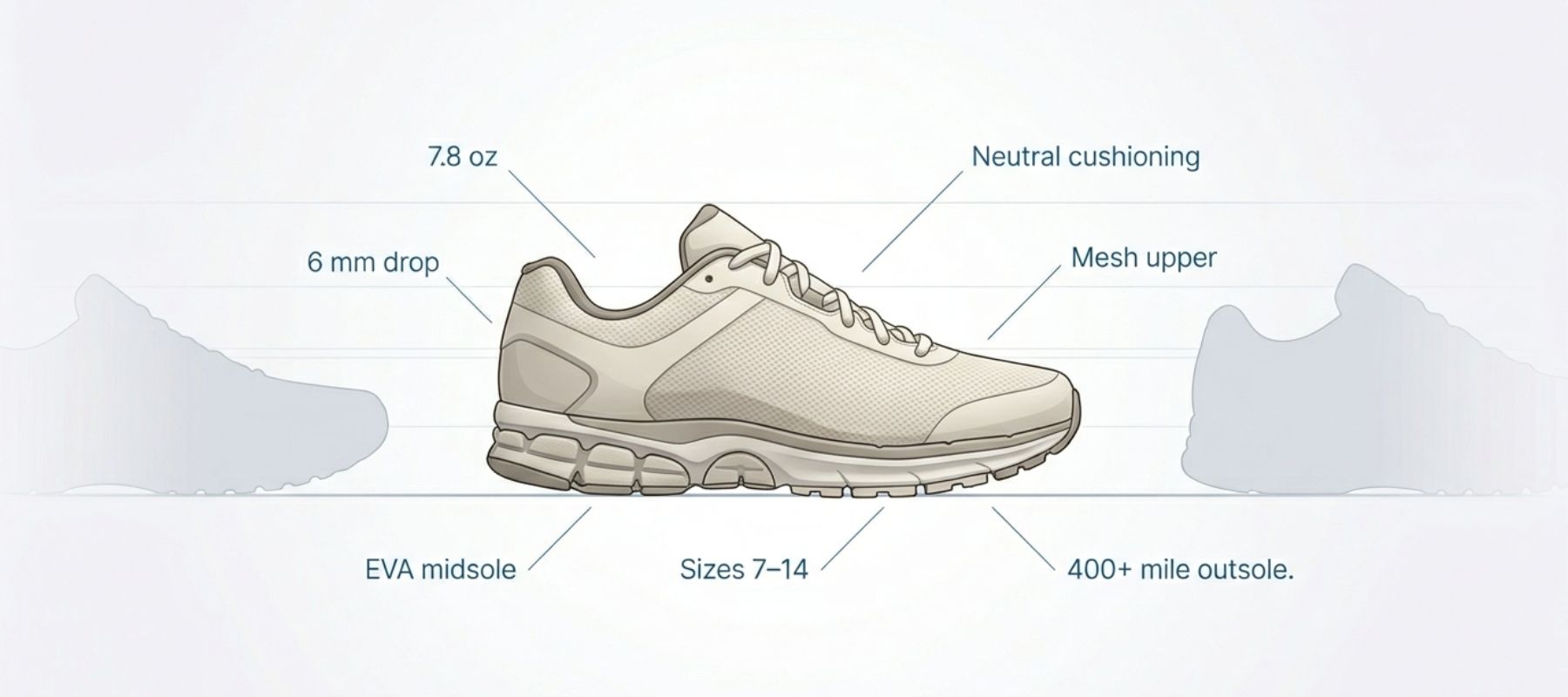
After: "AeroFlex Pro Lightweight Running Shoe — Men's, 7.8 oz, Neutral Cushioning, Road, Sizes 7–14"
The first title means nothing to a query fan-out. The second answers four sub-queries simultaneously: shoe type, weight class, cushioning profile, surface, and size availability. That's the difference between getting recalled and getting skipped.
Before/after: product descriptions
Before: "Designed for runners who refuse to compromise, AeroFlex Pro delivers an unmatched experience mile after mile. Step into greatness."
After: "AeroFlex Pro is a 7.8 oz neutral road running shoe with a 6mm drop, full-length EVA midsole, breathable engineered mesh upper, and rubber outsole rated for 400+ miles. Suitable for daily training and tempo runs on paved surfaces. True to size. Machine washable upper. Vegan materials. 30-day return policy. Free shipping on orders over $75 in the contiguous US."
Note what's there: weight, drop, midsole, upper, outsole durability, intended use, fit, care, materials, returns, shipping. Every one of those is a sub-query an AI agent fans out. Note also: legal disclosures must appear in the first 6,000 characters of the description per Shopify's official guidance for agentic storefronts.
Metafields and variant naming: the hidden ranking layer
Variants named "Option 1 / Option 2" are invisible. Variants named "Color: Slate Gray / Size: 10.5 / Width: D (Standard)" are parseable. Metafields let you store structured attributes — heel-to-toe drop, certifications, materials, country of origin — that appear in your data feed even when they're not in the visible description.
Lock a product attribute taxonomy. Clean variant names. Normalize alt text and imagery. Make sure shipping and returns policies match across the product page, FAQs, and support documentation. Inconsistency is a trust signal that AI agents penalize.
Inventory accuracy, pricing consistency, and shipping promises as trust signals
If your site says "in stock" and the product is backordered, an agent that recommends you and then sees a stockout will deprioritize you next time. Same with shipping. If your product page promises 2-day shipping and your checkout reveals 5-day, the AI layer eventually catches the mismatch. Everything downstream — GEO, agentic storefronts, measurement — breaks down if the underlying data is incomplete or poorly structured.
Alt text and imagery: what AI agents do and don't use
Alt text is read. Pretty lifestyle photography without descriptive alt text is wasted weight. Write alt text the way you'd describe the image to someone over the phone: "Men's AeroFlex Pro running shoe in slate gray, side profile, showing mesh upper and rubber outsole." Boring. Effective.
Attribution: How to Know If AI Discovery Is Working
You can't manage what you can't measure. The good news: ChatGPT-attributed orders are already visible in your Shopify admin today, no third-party tools required.
Finding ChatGPT referral data in your Shopify admin
ChatGPT orders display with Online Store channel attribution in the Orders list, with ChatGPT shown as the referrer to the channel. Open Shopify admin → Orders → filter by channel and check the referrer field. To see all ChatGPT-driven sales — converted and otherwise — pull the Total sales by referrer report under Analytics → Reports.
Setting up UTM parameters to separate AI platform traffic
Where you control links — your structured data feeds, support content, partner placements — append UTMs that distinguish AI-driven traffic from organic. Use a consistent convention so you can roll up sessions, conversion rate, and AOV by AI source over time.
The metrics that actually matter
Three numbers: AI-channel referral sessions (volume), AI-channel conversion rate (data quality and trust), AI-channel AOV (whether you're attracting the right buyer). Watch the trend, not the absolute number. AI orders on Shopify grew 15x in 2025 — your share of that growth is the real KPI.
Summary
- Shopify Agentic Storefronts auto-activate for eligible US merchants, but activation is not visibility — AI agents recommend the store with the cleanest structured data.
- AI-driven orders on Shopify grew 15x and AI-driven traffic grew 7x between January 2025 and early 2026.
- There is no page two in AI discovery. Unparseable data means silent skipping, not low ranking.
- AI agents parse titles, descriptions, inventory, shipping, and pricing — not your storefront design.
- UCP — co-developed by Google, Shopify, Etsy, Wayfair, Target, and Walmart, with Tech Council members now including Amazon, Meta, Microsoft, Salesforce, and Stripe — means one round of data cleanup propagates across every UCP-compatible AI platform.
- The highest-leverage action is a product data audit covering titles, descriptions, variants, metafields, inventory, and shipping consistency.
- ChatGPT referral attribution is visible in Shopify admin under the Online Store channel, with the Total sales by referrer report providing the cleanest breakdown.
Frequently Asked Questions
How do I check if my Shopify store is already showing up in ChatGPT search results?
Open ChatGPT and run buyer-style queries for your top categories — "best [product] under $X," "alternatives to [competitor]." Note whether your products surface and how. For systematic auditing across multiple SKUs, the ChatGPT Sales Scanner runs structured visibility checks against your catalog.
Does Shopify charge extra fees for sales that come through ChatGPT Agentic Storefronts?
No. Under the current Agentic Storefronts model, products become discoverable in ChatGPT by default with no separate integrations, no apps, and no transaction fees beyond standard processing rates. You remain the merchant of record and orders flow into your admin with ChatGPT referral attribution. Google AI Mode, Gemini, and Microsoft Copilot also charge no additional platform fees as of March 2026.
Can I opt out of having my products shown in ChatGPT if I don't want them there?
You can't fully opt out of the channel itself. Per Shopify's Help Center, there is no built-in checkout setting to disable ChatGPT discovery, but you can hide individual products from being discoverable by AI channels using Shopify's product visibility controls.
What is the difference between Shopify Agentic Storefronts and the old ChatGPT Instant Checkout?
Instant Checkout relied partly on web scraping and required arduous merchant onboarding — only around 30 Shopify merchants were live on it before OpenAI deprecated the feature in March 2026. Agentic Storefronts uses structured data via the Universal Commerce Protocol, auto-activates for eligible merchants, and routes ChatGPT buyers back to your own checkout where you remain the merchant of record.
Does improving my data for ChatGPT also help with Google AI Mode and Microsoft Copilot?
Yes. UCP, co-developed by Google and Shopify with Etsy, Wayfair, Target, and Walmart, standardizes how AI agents read commerce data, so one round of data cleanup propagates across every UCP-compatible platform. The same SEO fundamentals, brand authority, and clean structured data lift visibility everywhere agents shop.
How do I see in my Shopify analytics which orders came from ChatGPT?
ChatGPT orders display in your Orders list with Online Store channel attribution and ChatGPT as the referrer. Filter by channel in the admin and check the referrer field, then pull the Total sales by referrer report under Analytics → Reports for both converted and non-converted AI traffic context.
Related Reading
- AI Commerce Is Live on Shopify — 33% of Stores Haven't Even Started
- ChatGPT Is Now Recommending Products — Is Your Shopify Store Visible?
- How to Optimize Thousands of Shopify Product Listings Without Losing Your Mind
Sources
- Shopify, Millions of merchants can sell in AI chats (March 24, 2026) — shopify.com/news/agentic-commerce-momentum
- Shopify, Agentic Commerce: An Executive Guide (2026) — shopify.com/enterprise/blog/agentic-commerce-executive-guide
- Shopify, Agentic Commerce: Benefits & How To Get Started (April 2, 2026) — shopify.com/blog/agentic-commerce
- Shopify Help Center, Using ChatGPT agentic storefront — help.shopify.com/en/manual/online-sales-channels/agentic-storefronts/chatgpt
- Shopify Help Center, Using AI channels with built-in checkout — help.shopify.com/en/manual/online-sales-channels/agentic-storefronts/ai-channels-with-built-in-checkout
- Shopify Engineering, Building the Universal Commerce Protocol — shopify.engineering/ucp
- Google, New tech and tools for retailers to succeed in an agentic shopping era (January 11, 2026) — blog.google
- UCP Tech Council expansion announcement (April 24, 2026) — newsfilecorp.com
- PYMNTS, Shopify President: Agentic AI Drives 11x Spike in Orders (November 5, 2025) — pymnts.com
- CNBC, OpenAI's first crack at online shopping stumbled (March 20, 2026) — cnbc.com
- TechCrunch, OpenAI's plans to make ChatGPT more like Amazon aren't going so well (March 24, 2026) — techcrunch.com
- CNBC, Amazon wins court order to block Perplexity's AI shopping agent (March 10, 2026) — cnbc.com
- Modern Retail, Amazon quietly blocks more of OpenAI's ChatGPT web crawlers (November 25, 2025) — modernretail.co
- TechCrunch, Google announces a new protocol to facilitate commerce using AI agents (January 11, 2026) — techcrunch.com