Why I Built Nexus on Claude — and Why Shopify Just Validated That Bet

In early 2025, I sat down at my kitchen table in Santos with a question I needed to answer before I could build anything else.
Which AI model was I going to build my entire business on?
Not "which one do I use for this chatbot." Not "which one gives the best demo." The real question. Because whatever I picked, I'd be writing thousands of lines of production code against that company's API, designing my product around that company's pricing, and trusting that company not to deprecate, degrade, or disappear on me.
Every answer I'd get from the internet pointed to OpenAI.
Every answer I got from my gut pointed to Anthropic.
I went with my gut. Fourteen months later, Shopify validated that bet in the quietest, most concrete way possible — they built their official AI Toolkit around Claude Code. Here's what I saw then, what I've learned since, and why the tooling layer matters more than anyone reading model benchmark charts is giving it credit for.
The Room Every AI Builder Was In
Rewind to early 2025. The landscape looked like this:
- OpenAI was the default. ChatGPT had consumer mindshare. The API was on every developer's lips. Every tutorial assumed you were using GPT-4.
- Google Gemini was the corporate hedge. Enterprise buyers liked the Google name. The multimodal story was compelling on paper.
- Anthropic's Claude was the quiet option. Smaller team. Smaller marketing budget. No consumer app anyone had heard of. A reputation among researchers for being unusually thoughtful about safety and unusually good at longer-form work.
If you were picking based on logos, you picked OpenAI. If you were picking based on enterprise comfort, you picked Google. If you were picking based on the actual experience of writing serious code against the API and trusting the output — you picked Claude. And almost nobody was making the decision on that basis.
Why I Picked Claude
Three reasons. I'll give them to you in the order of how much they actually weighed when I made the call.
1. The output felt different when the stakes were high
I'd been testing all three models for months. On short prompts they were roughly interchangeable. Where they diverged was on the work I actually needed done — long-form product descriptions at scale, nuanced brand voice, code that had to survive being deployed to live Shopify stores without breaking.
Claude's output held up under weight. The others frayed.
It's hard to benchmark this. Nobody ships a leaderboard for "does the model still sound like your brand after 2,000 products." But if you're running a real business, that's the only benchmark that matters. I was running a real business. Claude won.
2. Anthropic's API felt like it was built by people who actually shipped production software
The docs were cleaner. The error messages were more useful. The rate limits were documented with the honesty of people who'd been on the other end of bad documentation. Small things. But when you're going to write code against this API every day for the next two years, small things compound.
3. The safety posture wasn't a liability — it was an asset
The conventional wisdom in 2025 was that Anthropic's safety focus was a handicap. "Claude refuses things it shouldn't." "Claude lectures you." I'd heard it all.
What I actually found, once I'd built real products, was that Claude's calibrated refusals were a feature when I was building something a customer would trust. I was shipping AI agents onto live Shopify stores that talked to real customers. The last thing I wanted was a model that would go off-script, invent competitor prices, or make up legal promises. Claude's tendency to stay inside its lane was exactly the kind of engineering conservatism I needed at the foundation layer.
What It's Actually Like to Build a Business on Claude
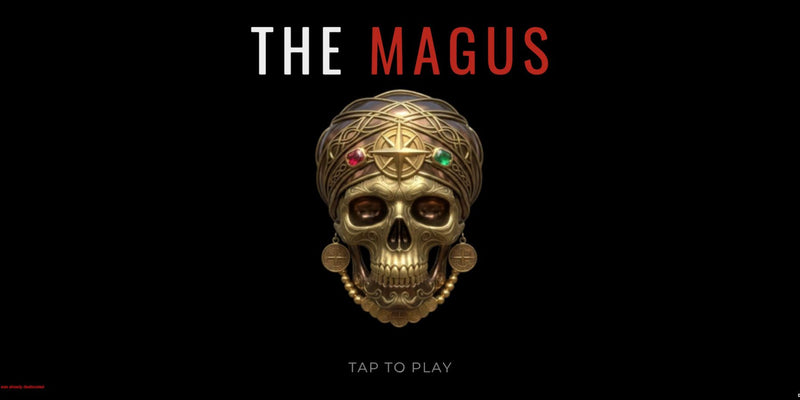
I've now shipped two production AI systems on Anthropic's API. Nexus — the custom AI agent platform that powers live stores. And The Magus — the AI audiobook production system that's produced every volume of The Feeder Series audiobooks.
Here's what nobody tells you about running a business on Claude.
The API is stable. Deeply stable.
In the last fourteen months I've had exactly zero unplanned breaking changes. Model versions get deprecated with generous runway. Pricing has moved in my favor more than once. Rate limits have expanded, not contracted. For a solo operator running multiple production systems across multiple live stores, this is worth more than any feature.
The capability jumps are real
When Claude Opus 4 shipped, my product got better overnight without me writing a single line of new code. When Claude Opus 4.6 shipped, Nexus's blog generation quality jumped a noticeable level. When Opus 4.7 shipped yesterday, the agentic workflows I'd been prototyping suddenly worked. Anthropic's model progress compounds into my product every quarter without a deployment.
The cost curve is sustainable
This one matters if you're selling AI services. Input token costs have dropped. Output quality has risen. The margin on every Nexus SEO contract I run has expanded, not contracted, as Anthropic has iterated. Try running that math on a competitor whose business model depends on charging more, not less.
The tooling keeps getting better
Prompt caching. Batch processing. Tool use. Extended thinking. Each of these arrived as a first-class feature, not a clunky bolt-on. Claude Code in particular has changed how I build — which is the exact same thing Shopify's engineering team just confirmed by picking it as their flagship AI Toolkit agent.
What Shopify Just Did
On April 9, 2026, Shopify open-sourced their AI Toolkit — the MCP plugin that lets external AI agents run live store operations through the Shopify CLI.
The Toolkit supports multiple agents — Claude Code, Cursor, OpenAI Codex, Gemini CLI, VS Code. But Claude Code is the agent that headlines every page of the official documentation. The install commands in Shopify's own docs lead with Claude Code. The walkthrough videos demo Claude Code. The engineering team's own blog posts show Claude Code executing real store operations.
This isn't accidental. When Shopify's engineers sat down to pick which agent to build their first-class experience around, they made the same call I'd made in early 2025. They looked at the field. They evaluated the real behavior on real production workloads. And they picked Claude.
Shopify didn't issue a press release explaining why. They just shipped.
The Lesson Isn't Which Model Won
Here's the part I want you to actually take away.
The lesson of the last fourteen months isn't that I was right about Claude. It's that the decisions that matter most in AI are made at the tooling layer, not the model layer.
Everyone obsesses over model benchmarks. Which one scored higher on MMLU. Which one wins at math. Which one has the biggest context window this week. Those comparisons are noise, because the models converge at the top of the market. GPT, Claude, and Gemini are all extraordinary. The differences on a paper benchmark are smaller than the differences between two human experts in any field.
What doesn't converge is the tooling. The API design. The documentation. The developer experience. The cost predictability. The safety posture. The integration surface. Whether the company behind the model treats builders like customers or like lottery ticket holders.
That's where businesses get built or destroyed. Not in the benchmark scores.
I picked Claude because the tooling was better. Shopify picked Claude Code as their flagship because the tooling was better. The merchants who install the AI Toolkit and build operational workflows on Claude Code over the next six months will compound their advantage for the same reason — better tooling, consistently applied, is a moat.
What This Means for Your Store
If you're running a Shopify store in 2026, you have three practical choices to make.
1. Pick your model before you pick your tools
Every AI tool you adopt is implicitly a bet on the company behind the model. Before you install a new Shopify app that runs on OpenAI, or subscribe to a marketing service that runs on Gemini, ask who's actually generating the output. Their reliability is now your reliability.
2. Invest in the tooling layer, not the shiny demo
The flashiest AI app isn't the best long-term bet. The app whose vendor understands production engineering is. Look for companies that ship predictable APIs, write honest documentation, and don't treat pricing like a growth hack.
3. Get your hands dirty with Claude Code
If you haven't installed the Shopify AI Toolkit yet, do it this week. Yes, Claude Code requires a paid Anthropic subscription — Max is around $200/month for serious use. Treat that as the cost of admission to the next operational paradigm. The merchants who pay the electric bill are the ones who get the advantage.
Nexus was built on that same bet. Fourteen months ago, before Shopify's engineers had made the same call publicly, I put my entire business on Anthropic. If you're looking at your own store and wondering whether to wait and see who wins the AI wars — I'd gently suggest that question already has an answer. It's just that most of the market hasn't caught up to it yet.
That gap is where the next opportunity lives.
Summary
- In early 2025, I picked Claude as the foundation for JFKAISLAY's entire AI stack — at a time when OpenAI was the default and Claude was the contrarian choice
- Three reasons drove the decision: Claude's output held up under production weight, Anthropic's API was built by people who actually ship software, and Claude's safety posture was an asset, not a liability
- Nexus and The Magus — both production systems — have run on Claude for fourteen months with zero unplanned breaking changes, expanding margins, and capability jumps that arrive without redeployment
- In April 2026, Shopify shipped their official AI Toolkit with Claude Code as the flagship agent — the same call I'd made internally, now validated by the platform's engineering team
- The real lesson isn't which model won. It's that the decisions that matter most in AI happen at the tooling layer — API design, documentation, cost stability, safety posture — not the benchmark scores
- For merchants: pick the company behind the model before you pick the tool, invest in tooling over demos, and install the AI Toolkit this week if you haven't
- The merchants who pay the Claude subscription and build Claude Code workflows now will compound a six-month operational advantage before the market catches up
Frequently Asked Questions
Why did you pick Claude over ChatGPT for Nexus?
Three reasons, in order of weight. First, Claude's output held up better on production workloads — long-form product writing at scale, nuanced brand voice, code that had to survive deployment to live stores. Second, Anthropic's API and documentation were built by people who clearly understood production engineering, which compounds over time. Third, Claude's safety posture meant fewer catastrophic failures when my agents were talking to real customers on live stores.
Is Nexus locked to Claude, or could you switch models?
Nexus is built on Claude and optimized for Claude's strengths, but the architecture isn't hardcoded. If Anthropic ever stopped shipping — they won't, but hypothetically — I could migrate the system to another provider with meaningful effort. That said, every quarter that Anthropic ships new capabilities, the cost of migrating away goes up, not down. I'm not planning to switch. I'm planning to deepen the bet.
What's Claude Code, and should I use it?
Claude Code is Anthropic's terminal-based coding agent. It runs on your machine, talks to the Claude API, and executes real work — writing code, running commands, managing files, and now (via the Shopify AI Toolkit) operating live Shopify stores through natural language. If you do any technical work on your store, you should use it. If you don't, you should find someone who does.
What does Claude Max cost and is it worth it for a Shopify store?
Claude Max is Anthropic's highest-usage Claude Code subscription tier, approximately $200/month at time of writing. For running bulk store operations — rewriting product descriptions, generating alt text, auditing themes, building integrations — it's worth every dollar. For a single-person store with low-volume needs, the standard Pro tier ($20/month) is probably enough. Start with Pro. Upgrade when you hit limits.
Did Shopify publicly endorse Claude as the best AI for the Toolkit?
Not explicitly. Shopify's documentation supports multiple agents — Claude Code, Cursor, OpenAI Codex, Gemini CLI, and VS Code. But Claude Code is consistently featured first in install instructions, walkthrough videos, and engineering blog posts. Reading between the lines is fair. Shopify picked Claude Code as their flagship experience.
How is Nexus different from just using Claude Code directly?
Claude Code is a general-purpose coding agent. Nexus is a custom AI agent platform built specifically for e-commerce — trained on your brand voice, your catalog, your competitors, your market. Claude Code executes store operations when you prompt it. Nexus sells your products 24/7, generates content, tracks competitors, and monitors your market continuously. Different tools for different jobs. Both run on Claude.
If I'm not technical, is any of this useful to me?
Yes, but you'll need help implementing it. The AI Toolkit requires a developer for setup. Claude Code requires terminal comfort. If that's not you, the faster path is hiring someone who does it — or working with Nexus where the whole system is delivered turnkey. The underlying Claude advantage still accrues to you either way, because the agents running on your store are running on the same model.
What happens if Anthropic gets bought or shuts down?
The same thing that would happen if any vendor disappeared — you migrate. I've architected Nexus so that migration is possible but not trivial. Realistically, the chance of Anthropic disappearing in the next two years is extremely low. The company is profitable on API revenue, well-capitalized, and the product has strong enterprise traction including the Shopify partnership. Betting against Anthropic right now is like betting against AWS in 2012.